A Pattern Keeps Showing Up. I Keep Opening The Door.
A Pattern
|
Last Saturday evening I attended a formal diplomatic meeting in Beverly with the President of Albania, the Lieutenant Governor, and the Albanian Ambassador, four flags, two national anthems, and one question: what role do diaspora communities play in shaping the countries they call home.
I am a state rep from Somerville. I am the daughter of immigrants. My mother was a union flight attendant who raised me on her own. I was in that room because I believe our immigrant and diaspora communities deserve representation in every room where decisions about their futures are being made.
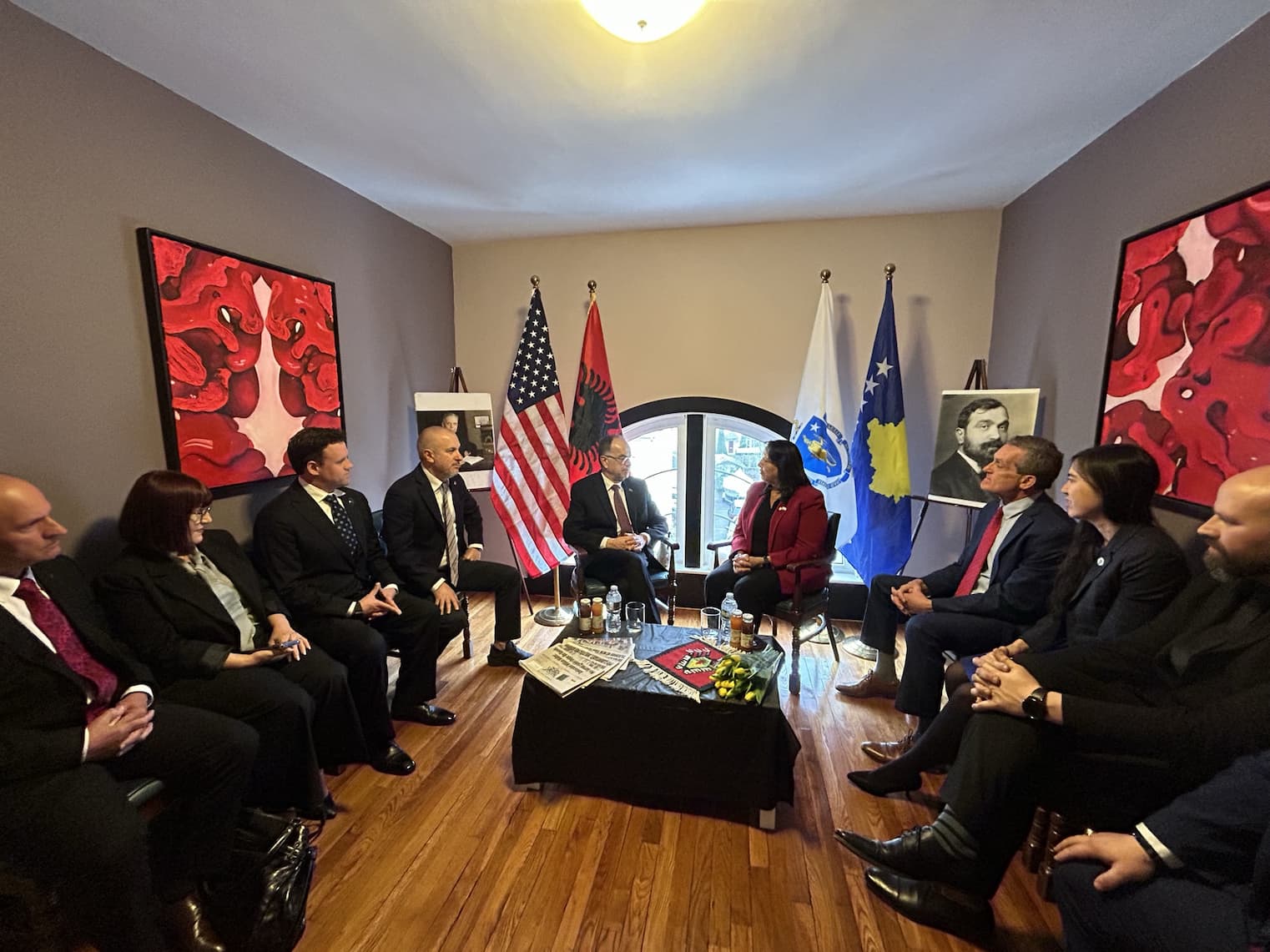
Formal diplomatic meeting with the President of Albania, the Lieutenant Governor, and the Albanian Ambassador. Beverly, MA, April 2026.
I want to share what I have been doing over the past few months, because a pattern keeps showing up and you deserve to see it.
What I found in the energy bill
In February, I fought against a billion-dollar cut to Mass Save, the program that helps families lower their energy bills, buried inside legislation that was being marketed as saving us money. I pulled the Attorney General’s findings showing that National Grid inflates the customer charge with costs that do not belong there. When the AG asked them to prove it, they said they do not track that data. They tracked it well enough to bill us every month.
I filed an amendment called “Constituents’ Right to Know.” It would have required utility companies to show us how they calculate our bills before they can raise our rates: executive compensation, shareholder profits, cost allocation, all of it on the table before the Department of Public Utilities can even open the case.
I asked for a roll call. Four people stood. Out of 160. The chamber would not record the vote.
What happened after I asked questions about the AI contract
Many of you saw my newsletters about the Governor’s decision to deploy a single AI company across the entire executive branch (you can read them here).
Here is an update, and something that has been weighing on me.
The good news first. After I raised these concerns publicly, the Governor’s office reached out. I appreciate the administration promptly meeting with me to discuss transparency, data protection, governance, and the role of labor unions in shaping how this tool is used. That happened because our community asked the right questions. Thank you to everyone who advocated for accountability.
But I kept digging. The evaluation that selected this vendor scored it 84 out of 100, with the next closest competitor at 73. Nine of those 11 points came from subjective categories, and in the same week the scoring criteria were finalized, the weight given to price was cut from 20% to 10%. The evaluation team had no documented AI or machine learning expertise.
If the state claims it evaluated vendors on “responsible AI practices,” then the comparison of their bias testing, safety results, and accessibility compliance should exist. If it does, we should see it. If it does not, then on what basis was that criterion scored?
These are the questions any responsible procurement process should be able to answer. And the reason I am sharing them is because what I did, asking these questions, demanding this transparency, could become illegal.
|
|
|
Why transparency is under attack
I wrote to you earlier about the “right to compute” movement (you can read that newsletter here). The short version: ALEC and dark money groups are pushing laws through state legislatures that would require the government to clear the highest legal bar we have before it could require any AI system to be transparent, audited for bias, or accountable. Montana already passed this. Similar bills are moving in New Hampshire, Ohio, and South Carolina. And President Trump signed an executive order creating a DOJ task force to sue states that try to regulate AI at all.
If those laws were in effect here, the questions I asked the Governor’s office, the same questions that led to seven officials meeting with me within 24 hours, could have been blocked before they were even asked.
What I brought into bigger rooms
The work I just described, the energy amendments, the AI procurement questions, the transparency fights, that is what I do on Beacon Hill every week. But in April I also brought those same fights into rooms where the decisions that affect our district are being made at a larger scale. I believe you should know where your legislator is and why.
Three weeks ago, I presented at an international conference on community resilience alongside a former FBI Chief Information Security Officer and a defense transformation leader with 25 years of military service. The AI tools being discussed in that room are the same tools that determine benefit eligibility in Medford, that process housing applications in Cambridge, that set property tax assessments in Winchester, and that are being used by ICE to track families in Somerville. The people building those systems need to hear from the communities they affect, and I made sure they did.
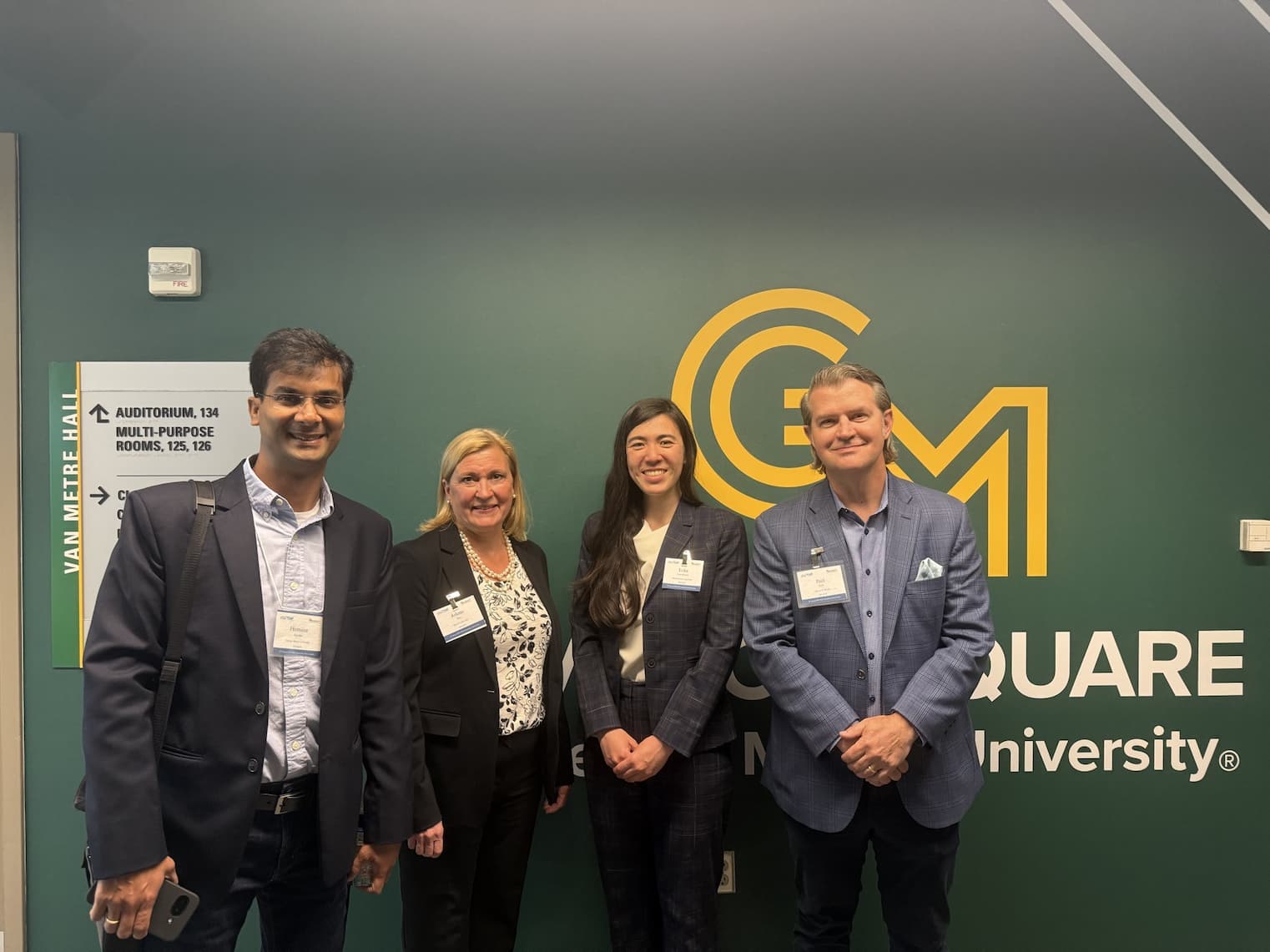
Presenting at the STAR-TIDES international conference on community resilience alongside a former FBI Chief Information Security Officer, a defense transformation leader, and the Director of GMU’s Human Centered AI program.
Last week, I spoke at the Asian American Business Development Center’s AI policy initiative alongside the President and CEO of Samsung Electronics America. I was there to talk about the AI transparency policies I am championing here in Massachusetts, because when a company builds an algorithm that screens job applicants or evaluates insurance claims for residents in our district, the rules governing that algorithm are being written right now. We need to be in the rooms where they are being written.
Saturday, I was in Beverly for the diplomatic meeting I mentioned above, where the conversation centered on empowering diaspora communities as a bridge between nations, so that both countries can learn and grow together for a better future. Our immigrant and diaspora communities in Somerville, Medford, Cambridge, and Winchester are already doing that work every single day.
Why does this give me hope?
Because the pattern is not unbeatable. We have proven that.
I fought to make all committee votes public. That reform is what allowed advocates to see who was behind the corporate energy bill and block it. Transparency worked.
We organized and won the Fair Share Amendment, which brings in roughly $3 billion a year for education and transportation. We organized and won $1.5 billion more for our public schools through the Student Opportunity Act. When we fight for what we need with data and with organizing, we win it.
This session, I co-sponsored every bill on the progressive agenda. All twenty-two. I earned a 97% progressive voting score. Not by going along, but by doing the work, filing the amendments, and standing on the floor when the building wanted everyone to sit down.
What comes next?
I have been building something. Something I will be sharing with you soon. It is not just questions anymore. It is the answer to the pattern I keep finding: a way to make sure our communities have a voice before the decisions are made, not after, and a way to make sure that what happened in Montana does not happen here.
That is how I approach this work: not just showing up for the vote, but doing the work before and after, and showing you what I find, because I believe you deserve to see it.
What you can do: If you know someone who needs to see this, please forward it. If you have a story about energy costs, AI decisions, immigration enforcement, or any decision made about your life without your input, reply and tell me. And keep an eye out for what comes next.
| Keep This Work Going → |
P.S. I believe in showing my work. That is why these newsletters exist. If you want to support the kind of representative who digs into the scoring sheets, opens the doors, and tells you what she finds, please chip in here. No PAC, no corporate money.